In Touch Rolls Out New Case Management System, ERIC
Our new Case Management System, Enterprise Resource Information and Control (ERIC), is now LIVE!
In Touch Volunteer
The quarantine keeps extending in the hopes of reducing the number of COVID-19 cases here in the Philippines. However, it is taking a toll on our mental health, especially for the youth. While we have different coping strategies to adapt to the “new normal,” sometimes other people take extreme measures to deal with stressful events, such as injuring themselves. But ever since the pandemic began, there are anticipations of rising self-harming cases.
Self-harm is the act of intentionally causing pain and damage to oneself. The typical methods of self-harm involve cutting a body part with a sharp object (e.g., blade), burning of flesh, hair-pulling, hitting oneself, crushing bones, object insertion into skin, delaying the healing of injury, or suffocating self.
Self-harm is more common than you think, especially for Filipinos aged 15-24 years old. However, talks about mental health issues are still taboo here in the Philippines, and topics on self-harm are no different, making it seem rare in the country. And, although not all self-harm had intentions to die, it cannot be ignored since this may still lead to suicide or death.
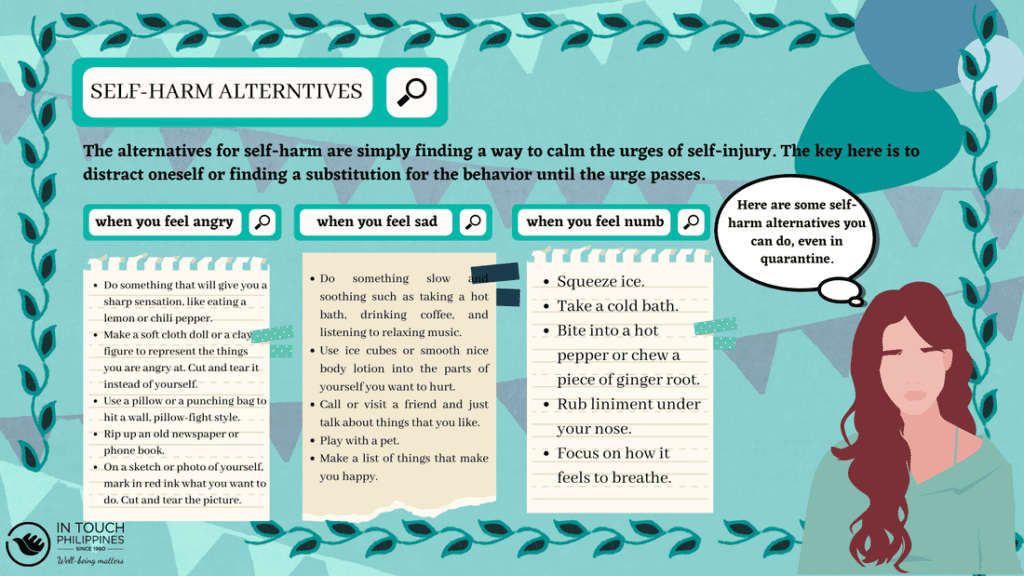
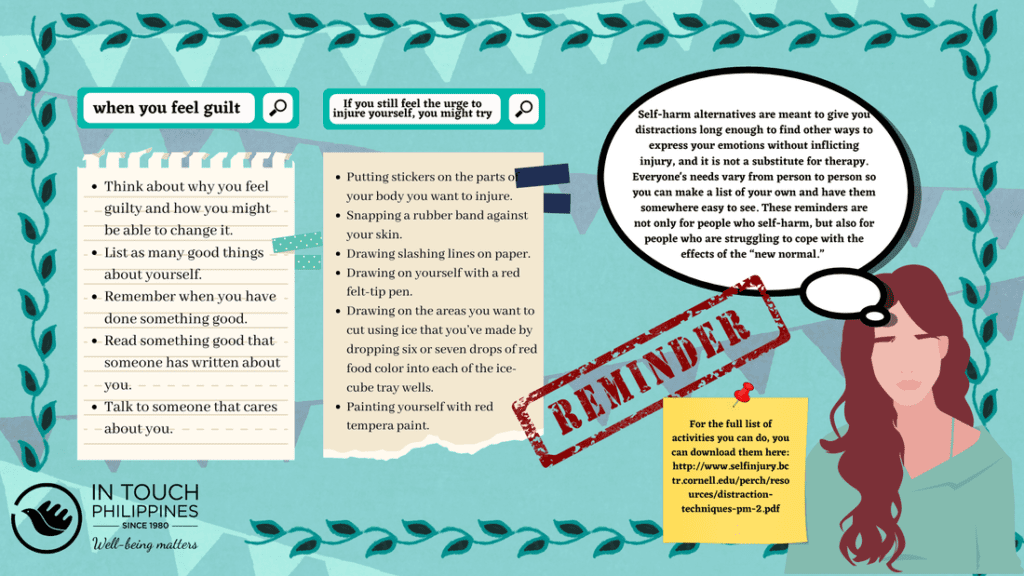
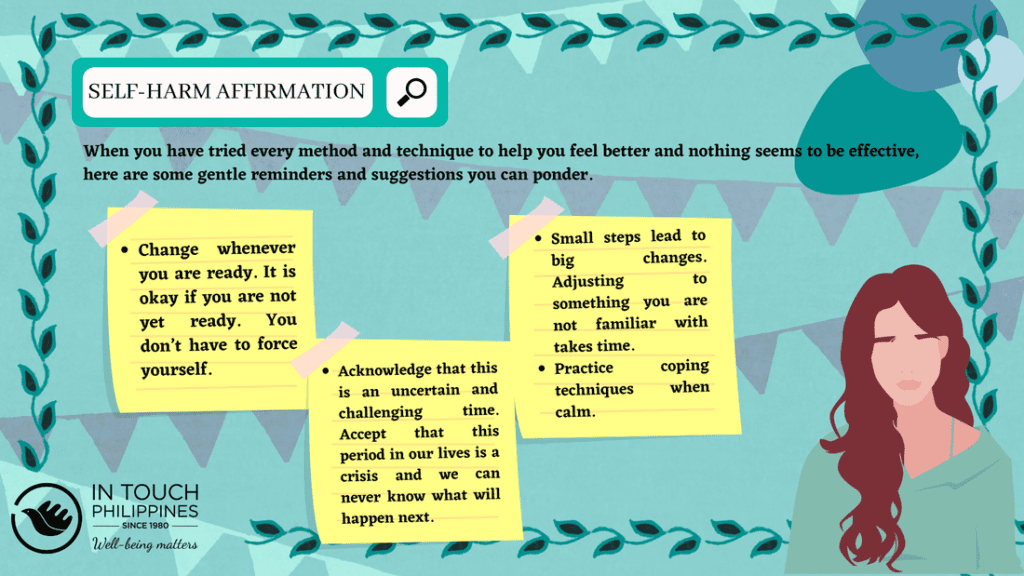
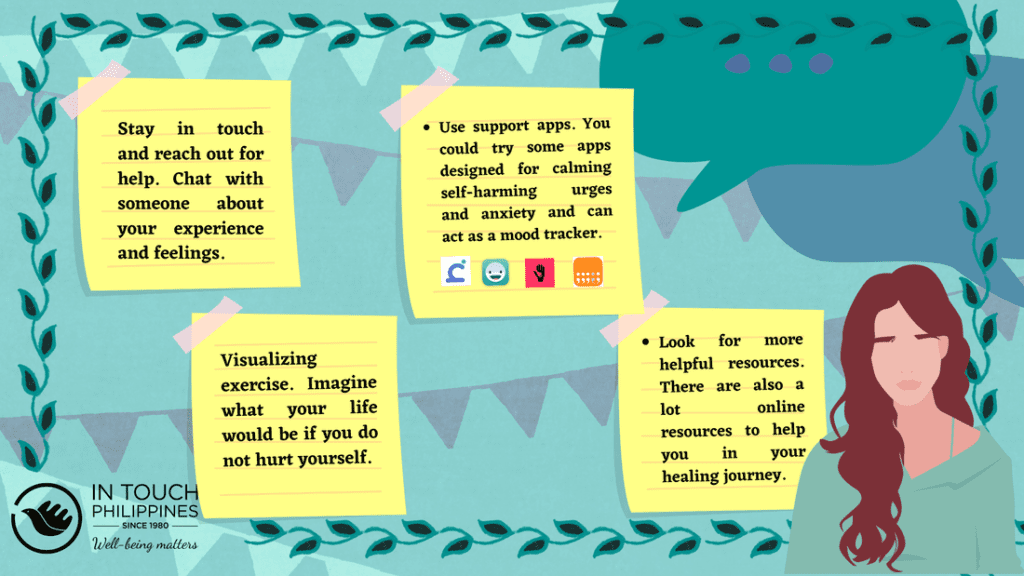
It may seem to injure oneself is the only option but there are other ways you can cope during this pandemic. If you are seeking safe and healthy substitutes for self-harm, look no further. In Touch Family has your back.


References:
1) FAIR Health, Inc. (2021, March). The Impact of COVID-19 on Pediatric Mental Health. https://s3.amazonaws.com/media2.fairhealth.org/whitepaper/asset/The%20Impact%20of%20COVID-19%20on%20Pediatric%20Mental%20Health%20-%20A%20Study%20of%20Private%20Healthcare%20Claims%20-%20A%20FAIR%20Health%20White%20Paper.pdf
2) John, A., Okolie, C., Eyles, E., Webb, R. T., Schmidt, L., McGuiness, L. A., Olorisade, B. K., Arensman, E., Hawton, K., Kapur, N., Moran, P., O’Connor, R. C., O’Neill, S., Higgins, J. P., & Gunnell, D. (2020). The impact of the COVID-19 pandemic on self-harm and suicidal behaviour: a living systematic review. F1000Research, 9, 1097. https://doi.org/10.12688/f1000research.25522.1
3) Self-harm | NAMI: National Alliance on Mental Illness. (n.d.). National Alliance on Mental Illness (NAMI). https://www.nami.org/About-Mental-Illness/Common-with-Mental-Illness/Self-harm
4) The Recovery Village, Kopf, J., & Patterson, E. (2021b, April 14). Self-Harm. The Recovery Village Drug and Alcohol Rehab. https://www.therecoveryvillage.com/mental-health/self-harm/
5) Redaniel, M. T., Lebanan-Dalida, M. A., & Gunnell, D. (2011). Suicide in the Philippines: time trend analysis (1974–2005) and literature review. BMC Public Health, 11(1). https://doi.org/10.1186/1471-2458-11-536
Graphics by: Allana Acosta

Our new Case Management System, Enterprise Resource Information and Control (ERIC), is now LIVE!
Understanding and celebrating diversity in relationships, identities, and expressions is vital in creating inclusive and supportive environments. This module, Inspiring PRIDE, focuses on promoting mental
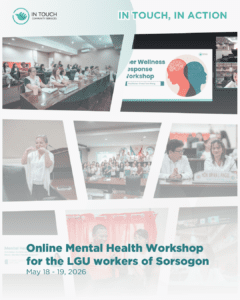
Last May 18 – 19, 2026, we had the privilege of conducting an Online Mental Health Workshop for the dedicated LGU workers of Sorsogon. Together,
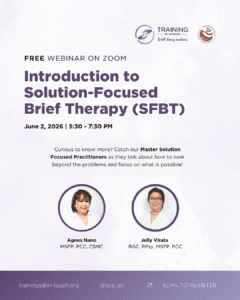
In Touch Community Services, Inc. is inviting all mental health professionals and HR practitioners to join us for a FREE webinar on the Introduction to
It may seem to injure oneself is the only option but there are other ways you can cope during this pandemic.
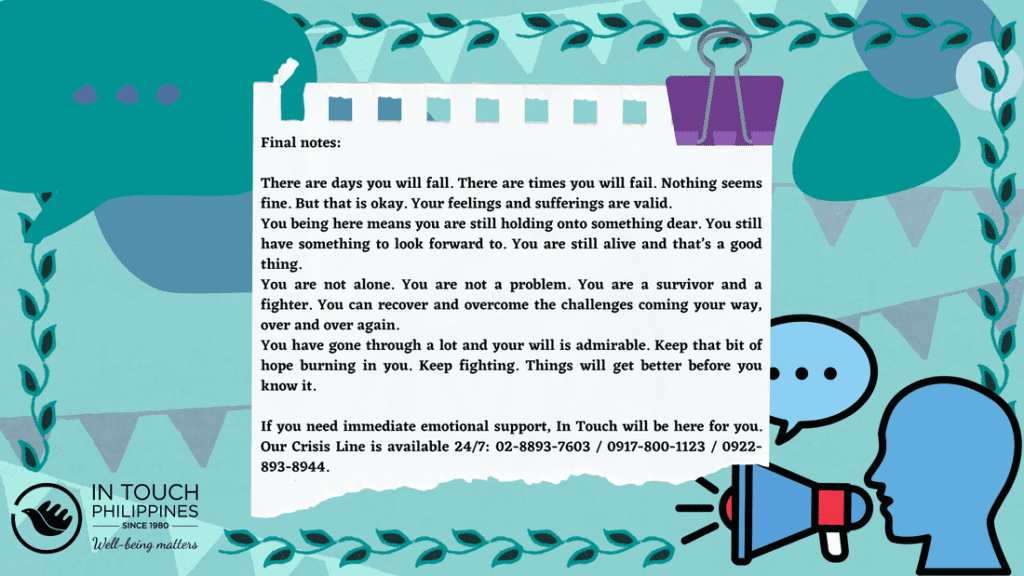
For any immediate or in-the-moment emotional support, call our 24/7 CRISIS LINE. Our professionally trained responders are on standby to assist you.